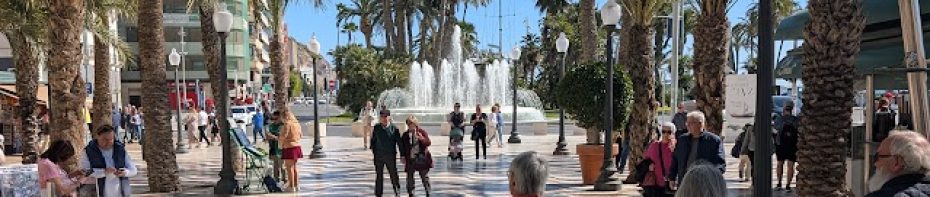

Fort San Felipe de Barajas sits high above the defensive wall that surrounds Cartagena as it has for 480 years. Over those centuries pirates, the French, the British and finally Spain wanted strategic control of Cartagena de Indias to seize the wealth of the shipping and the slave trade. The largest and strongest fortification in all of South America, San Felipe stood as a symbol of strength against European domination of the entire continent.
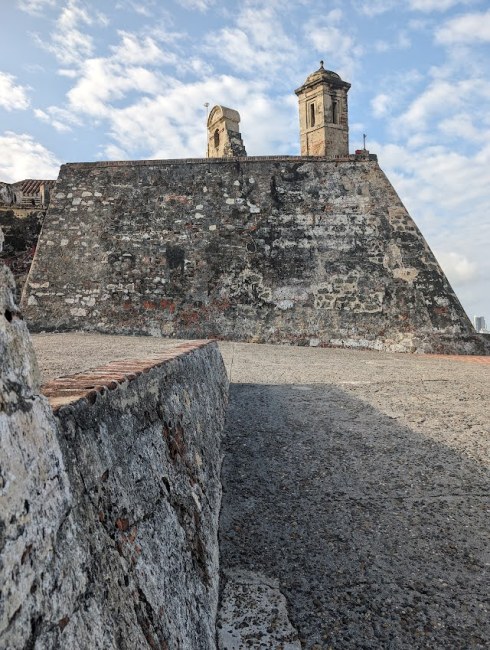
In the beginning (the 1530s) the walls of the fort were constructed of sticks and mud. By 1657 the walls had grown to stone several feet thick. Finally in 1763 the entire fort structure as it stands today was created with an extensive labrynth of tunnels underpining the immense and complex limestone wall structure above. It is said early warning of an attack came from the underlying tunnels. The defending soldiers could hear the feet of their attackers through the earth as they silently advanced on the fort, an unintended strategic advantage.
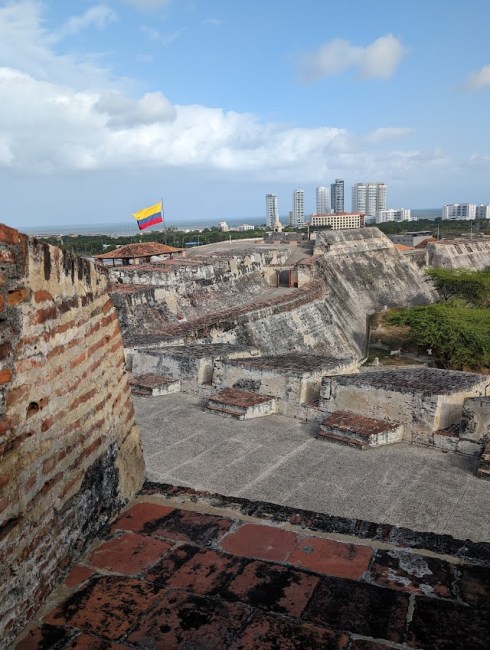
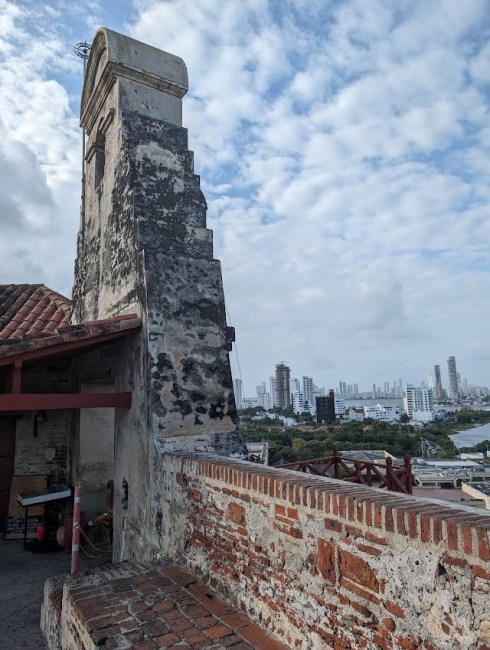


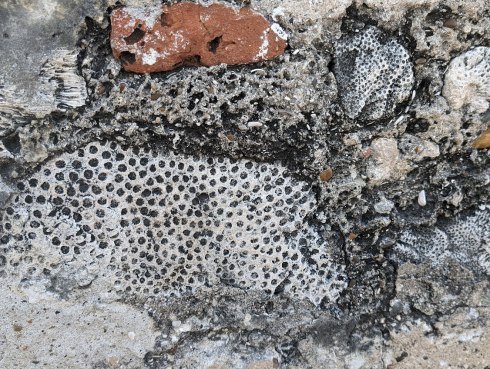
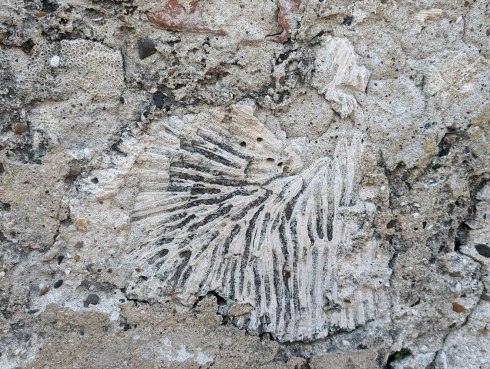
The walls show the proof of centuries of construction techniques. One of the most recent was the use of Portland Cement in the 20th century. But among the limestone, brick and cement we found rock surfaces with impressions resembling different types of coral. It was a reminder that Cartagena was a bastion of defence for the entirety of the Carribean Coast of South America.
 MedFlies
Leave a comment