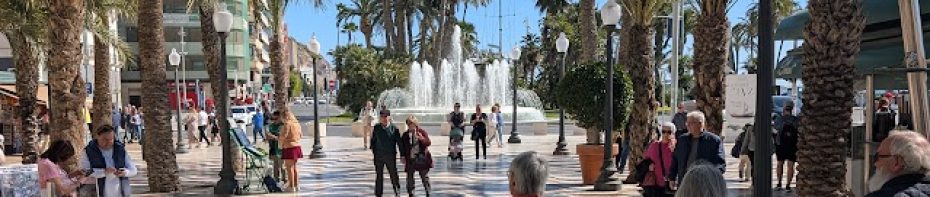

Spain fought a bitter Civil War from 1936 to 1939. Republicans were loyal to the left-leaning Popular Front government of the Second Spanish Republic. The opposing Nationalists were an alliance of Falangists, monarchists, conservatives, and traditionalists led by a military junta headed by General Francisco Franco.
Alicante was strongly Republican with 80% support among the population. Spaniards from other larger cities like Madrid sought safety in Alicante, as it was a rearguard zone and refuge for Republican troops. There was light bombing in the early years of the war. But as the war progressed Alicante came under heavy assault and toward the end was bombed the equivalent of every three days for a year.
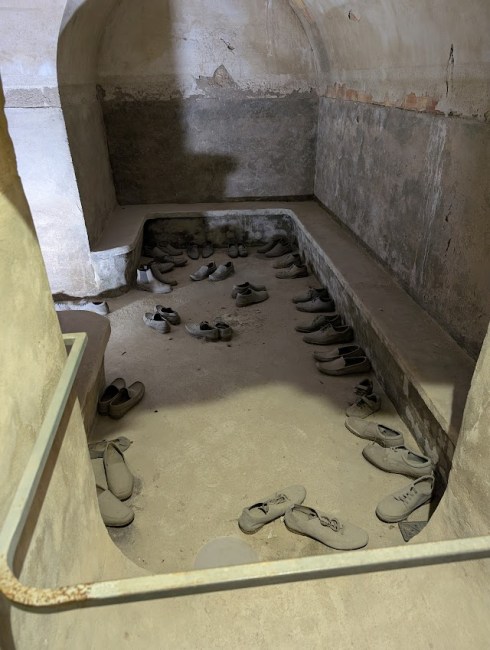
Alicantinos sought refuge from the bombings in the more than 90 air raid shelters built under the city. The cities inhabitants and refugees from other parts of Spain squeezed into the dark moist spaces. Shelters built for 250 people held over a thousand, standing room only.

We visited two shelters. It was an extraordinary experience. We sat in the dark stone 8 foot by 10 foot chamber where 25 people sat, stood, ate and slept for the bombings that sometimes lasted for eight hours straight over the course of days. The elderly and children were given the bench squeezing in as many as possible.
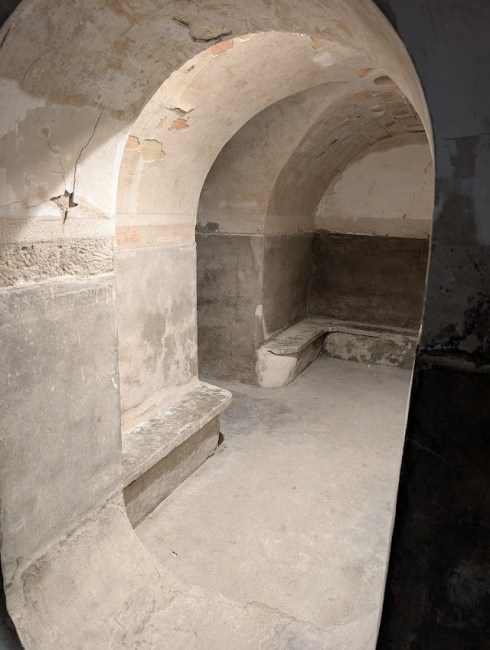

During the bombings the air was funneled in from the surface through 10 inch vents. We sat in the dark through a three minute simulation of what this feels like with sirens blaring and the sound and vibration of the blasts above.

The bombers, flying from the nearby island of Majorca, bombed at night. Hearing the sirens, Alicantinos made their way through the darkness to the shelters. Candles were the only light underground in the dark. If there was room, people took turns laying on the dirt floor to rest from standing for hours.

Toward the end of the war the Republicans were outnumbered. The Nationalist army had more than a million men at the end of 1938, with 35,000 Moroccans, 32,000 Italians and 5,000 Germans as well as 600 aircraft. The Republicans had between 250,000 and 500,000 men, 40 aircraft, 225,000 rifles, no shoes and no overcoats. Alicante was the last major city to surrender three days before the end of the war. Franco would accept nothing less than unconditional surrender and showed no mercy to the defeated Republicans.
Thousands of Spaniards came to Alicante in the hope of escaping Franco’s troops. One British vessel, The Stanhope, left its cargo on the harbor dock to take 2600 refugees to freedom in North Africa. But thousands more people were left behind and sent to concentration camps, some to remain there until the end of WWII. Franco’s dictatorship continued until his death in 1975.
The docents at the air raid shelters museum are in their 20s. Their youth and pride in Alicante and its Civil War history is moving. They speak of their Civil Was heroes with a striking familiarity, telling stories of their bravery and reciting poetry written by Miguel Hernandez Gilabert, the most famous Republican poet of the Spanish Civil War as he spoke of his people and his land. He died in a Spanish concentration camp in 1942 and is buried in Alicante.
“Goodbye, brothers, comrades, friends, say farewell for me to the sun and the wheatfields.”
 MedFlies
This is so moving, Jill. Thank you for going there and experiencing/documenting this important memorial. I so admire your deep curiosity. Love, Dede
>
Dede, This is the extraordinary gift of travel. So glad we can share it with the people we love, Jill
Reminds as one who now lives in The South of how localism can persist. Yes there were brave Confederates who fought heroically in a Lost Cause. It only becomes historicism when the deserved “lostness” of the cause is downplayed or forgotten.
Derek Simmons retiredinsanclemente@gmail.com
I am sure you understand this better than we can with your military background. It is easy to romanticise or idealize.