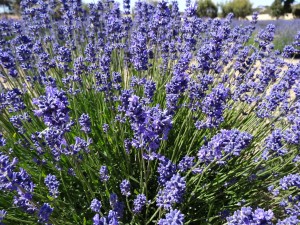
As you all know by now, growing lavender is one of my passions. For this reason Dana and I visit lavender farms and talk to the owners whenever we have the chance.
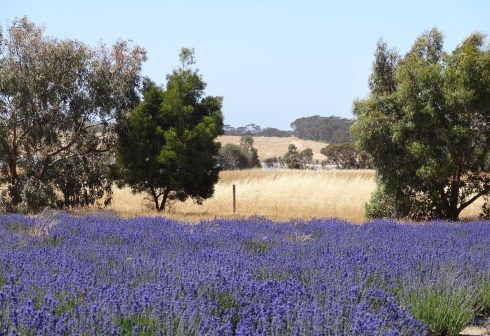 On Kangaroo Island’s north coast, Emu Bay Lavender is a farm that began with research on growing angustifolias and lavandins. These are the two basic kinds of lavender, lavandula angustifolia (fine lavender) and lavandula x intermedia (lavandin.) Lavandins are grown for their outstanding oil production while angustifolias are grown more for their aroma. Lavandin has a stronger smell of camphor and angustifolia has the sweet flowery scent.
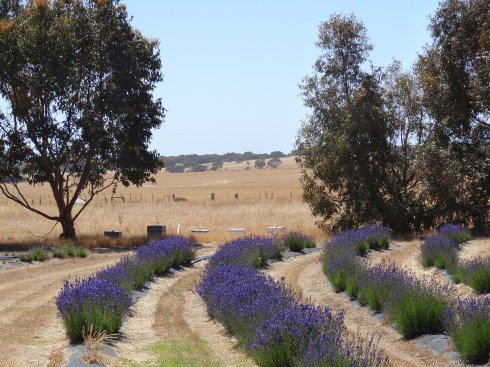 In 2002 the owners of Emu Bay, Tony and Maria, planted selected varieties of their lavender from a choice of over 200 varieties available world-wide. They planted six different varieties of Grosso, Super and Seal (lavandins) and Miss Donnington, Munstead and Impress Purple (angustifolias.)
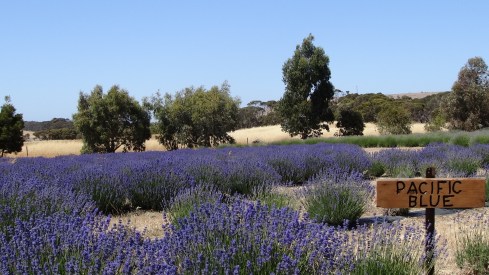
From the first year Emu Bay lavender has been harvested by hand. They use hand sickles to cut and bunch the lavender and the dried plants’ stems are stripped by hand. Today the farm has expanded to one hectare of land committed to 12 varieties of lavender. It produces 8000 bunches of lavender that yield 125 kg of dried stripped flowers and 5 to 8 liters of essential oil to be used in products made by the farm.
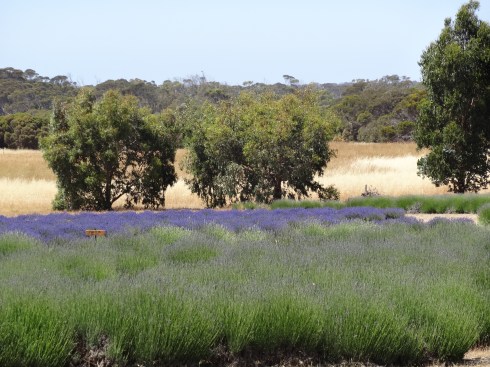 Contrary to what you would expect, lavender loves full sun and poor soil as long as it is well-drained. It also requires little water. When Dana and I toured lavender farms in France, we saw wild lavender growing in soils that appeared to be 100 percent limestone rock. Lavender likes limestone because it needs calcium, a substance in abundance on Kangaroo Island.
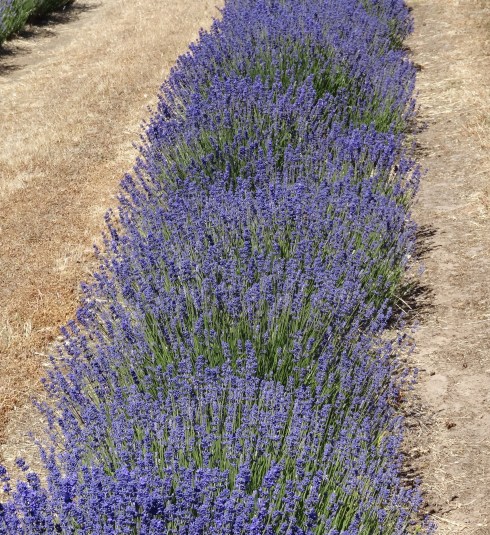 And though lavender is thought to be pest resistant this is not true. At Emu Bay they have problems with grubs, caterpillars, beetles and the wandering wallaby who nibbles on the fresh growth.
When you shop for lavender products remember to ask which kind of lavender was used to make them. Angustifolias are relaxing and calming. Oils from these plants are used for aromatherapy. Lavandins are stimulating. Oils from these plants are used for soaps and pot pourris.
 Tony and Maria are smart, creative, hardworking and ingenious farmers. Not only do they grow lavender and make products, they built their own farm shop and opened a small restaurant specializing in dishes using culinary lavenders. This diversity is what it takes to make a living growing lavender.
We talked to Tony about buying and running a lavender farm. He suggested very diplomatically, “it is a young person’s game.” And I suspect that is true… but one can always dream.
 MedFlies