

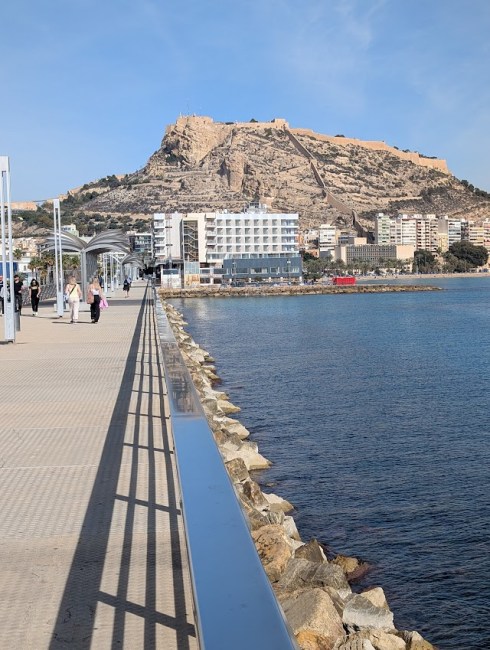
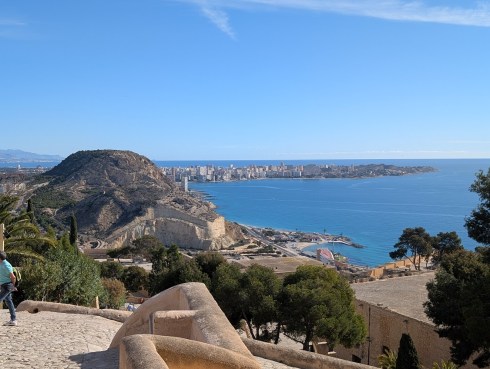
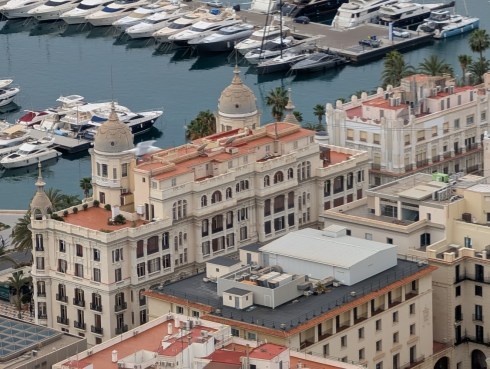
Santa Barbara Castle dominates the landscape, the history and the culture of Alicante. You can see it in full view or in glimpses from all parts of the city. From the top of the castle walls you can see the entire city all the way to the circling mountain ranges. The harbor to the bullring is all visible from the top of the Castle. And the view continues down the winding stone road that descends 160 meters, from the top of Mount Benacantil to sea level.
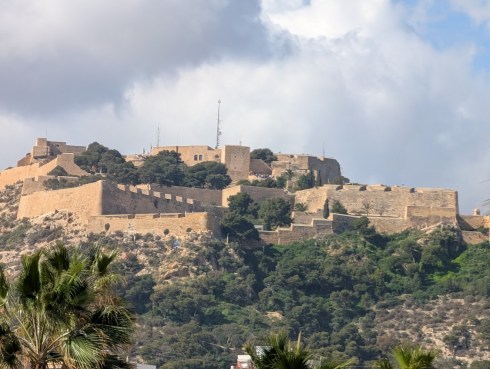

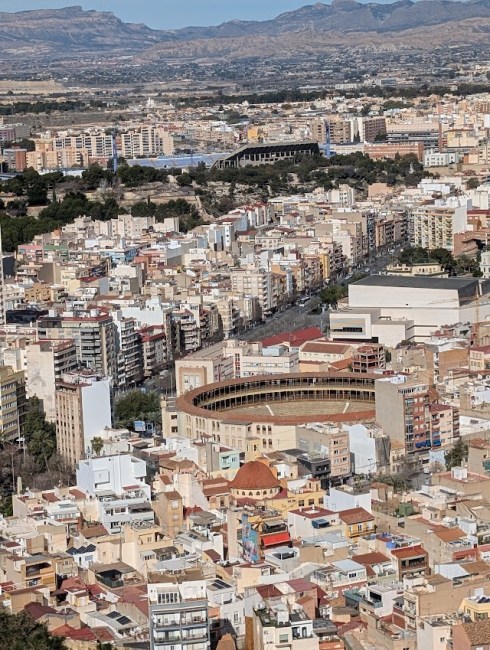
The Muslims were the first to the mountaintop when they dominated the Iberian peninsula for five centuries until their defeat by Castilian forces led by the Spanish King Alfonzo in 1248. Alfonzo, a Catholic, named the Castle after Saint Barbara as the day of his victory was her feast day. At the end of that century the Spanish “renovated” the Muslim structures destroying much of what existed at that time. Medieval architecture replaced Moorish. In succeeding centuries the Castle was inhabited by the Habsburgs, bombed by the French, occupied by the British and finally decommissioned and abandoned at the end of the 19th century.


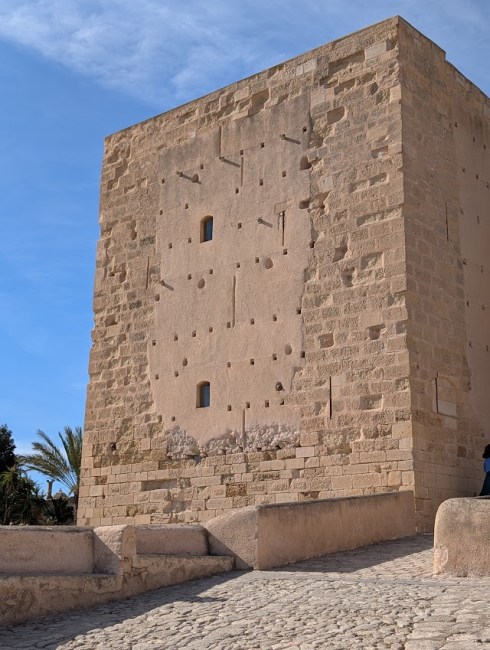

Today the Castle is a community of structures built over the centuries on a long, steep and sinuous stone block road. Visitors can walk the road from bottom to top exploring as they go but most opt for the elevator built into the center of the mountain going up and walk down. Along the way are stone structures dedicated to the art of warfare and royal governance. Though ruins of an extensive palace and a monastery can also be seen.

An Alicante legend says the name of the city came from the Castle. The story goes that there once was a Muslim caliph who had a beautiful and intelligent daughter, Cantara, the would be heir to his lands and peoples at his death. As you would expect Cantara had two suitors, a rich man, Almorzar, and a poor man, Ali. The caliph preferred the rich man, Almorzar, who was a fierce warrior and son of a wealthy family in Cordoba. But Cantara loved Ali, a simple man. The caliph was not swayed and forced Cantara to marry Almanzor. Broken hearted Ali lept from the top of the castle wall to his death. And a desolate Cantara followed her beloved. The kingdom and its subjects, moved by the tragedy, decided to join the names of the two lovers forever in the name of the city “Alcantara,” which in time became Alicante.
Others say that Alicante comes from the Arabic word “Al-Laqant” meaning the city of the castle or the fortress. I will let you decide.
 MedFlies