
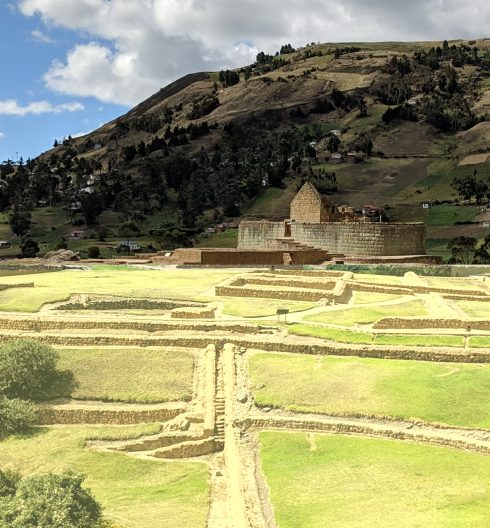
We traveled to Ingapirca on a fabulously sunny day. The archeological site sits at 10,500 feet in the Andes. The largest archeological ruins in Ecuador, it is the only complete elliptical structure left by the Incas.
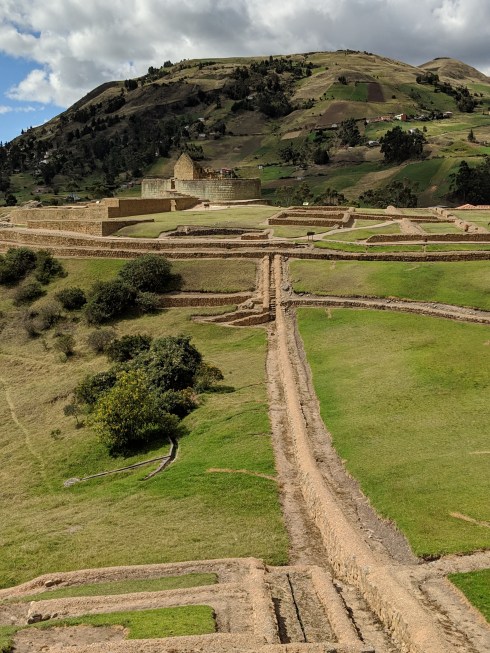
The Canari tribe inhabited this site before the Inca. In fact the Inca civilization inhabited Ingapirca for just 70 years before being conquered by the Spanish. The name of the site Inga (Inca) and Pirca (wall) is even rooted in the native language of Quechua.
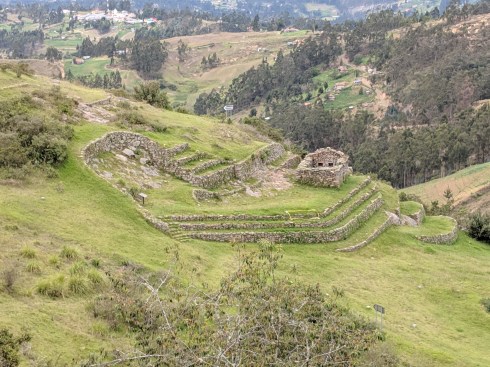
Unlike other people the Canari fiercely resisted the loss of their culture when invaded by the Incas. In fact, the Inca king married a Canari princess and the two cultures blended. But the cultures kept separate customs.
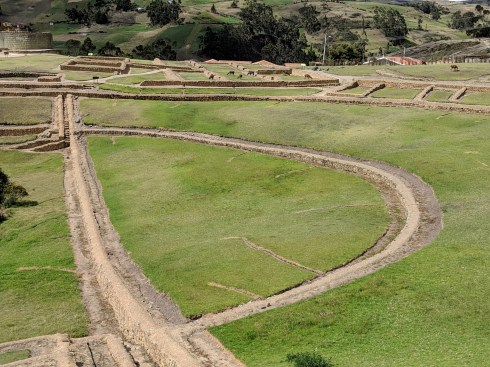
The Canari worshipped the moon, a matriarchal society. And the Incas worshipped the sun, a patriarchal society. The physical site at Ingapirca reflects these two spiritual beliefs. The overall design is in the form of a puma, a strong Canari spirit, and includes curvilinear half moon designs.

The stones used by the Canari are rounded and held together with mortar. The Inca cut stone in precise blocks and stack them so closely together a knife blade cannot fit in the spaces between.
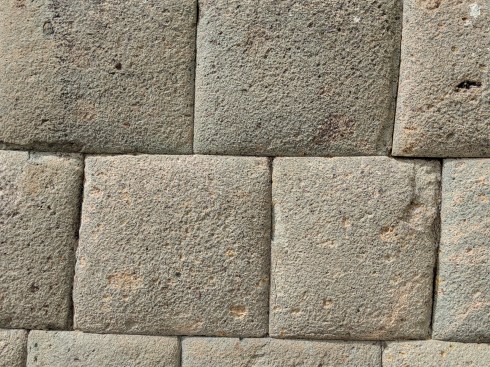
Inca buildings are placed precisely to face the East, the rising sun. Doorways, windows and sacred stones are placed to measure the solstices (winter in June, summer in December in the southern hemisphere) so that the sun measures time with exact placement in the structures.
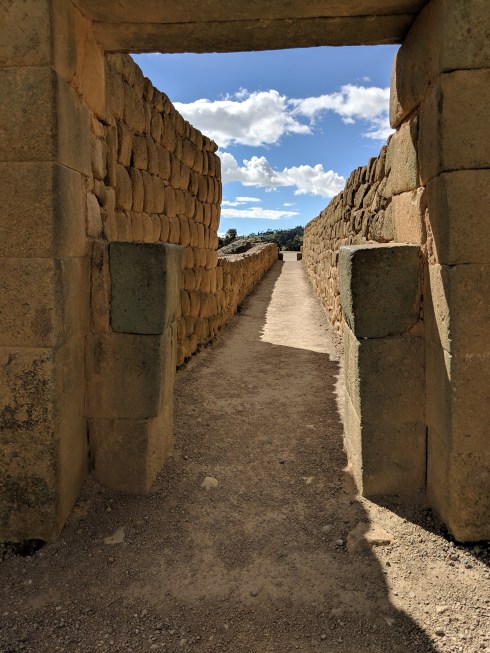
The rectilinear sun temple of the Incas was used for ceremonies and ritual sacrifice.

The Canari were one of the only “conquered” tribes to coexist successfully with the warlike Inca. The descendants of both civilizations inhabit Ecuador today.

Editor’s Note: I visited Machu Picchu in Peru and the site was overwhelmed by visitors. There were lines to enter many of the structures. In comparison, Ingapirca is relatively undiscovered. The peace, open space and untouched beauty are a gift.
 MedFlies