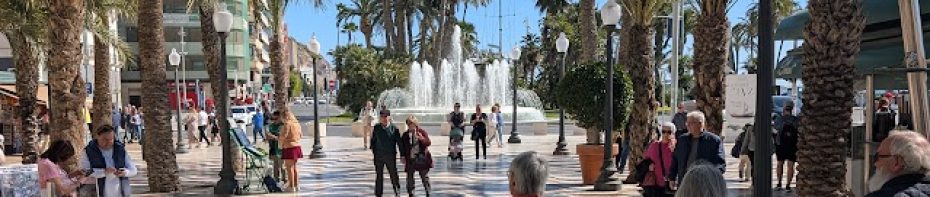

The Basilica of the Holy Cross is much loved by the citizens of Lecce. It stands as a testament to the Baroque archtectural style taking two centuries and three architects to complete.
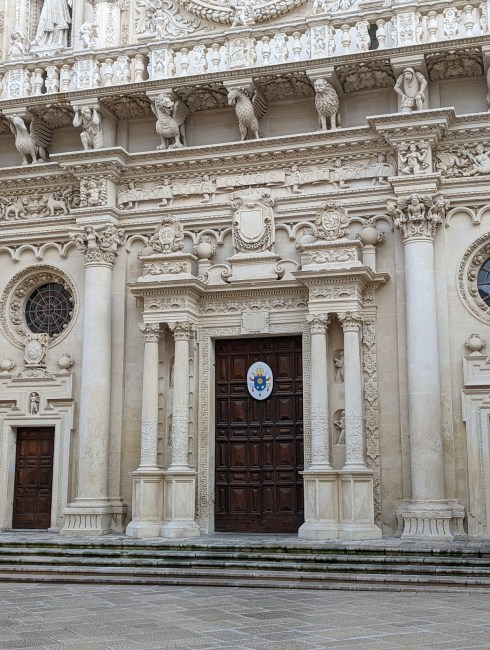
The Basilica was built in three phases in the late 1500s and 1600s. Gabriele Riccardi designed the lower facade in the 16th century. Lecce born Francesco Zimbalo created the three main portals in the early 17th century. And later in the 17th century Cesare Pena completed the upper facade. All three architects worked in the Baroque style and designed elaborate carvings on every surface of the structure. Though there is a strong contrast among the figures and symbols used in each phase of the ornamentation.
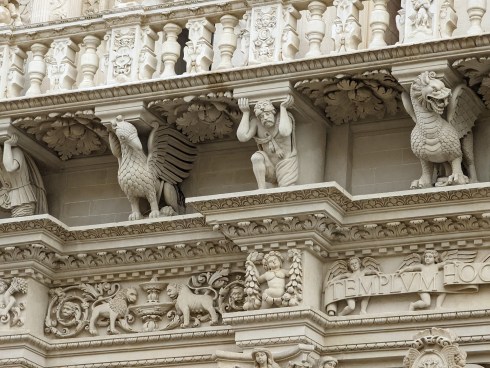
The master stone masons and carvers of Lecce worked with limestone rock (leccisu) unique to Salento. This limestone is precious biocalcarenite, a particular soft stone that is unusually malleable and lends itself to intricate carving. The softness of the stone allows elaborate shapes and forms that another harder rock would not permit. But Lecce limestone is also porous leaving it vulnerable to the stress of centuries of aging and the elements.

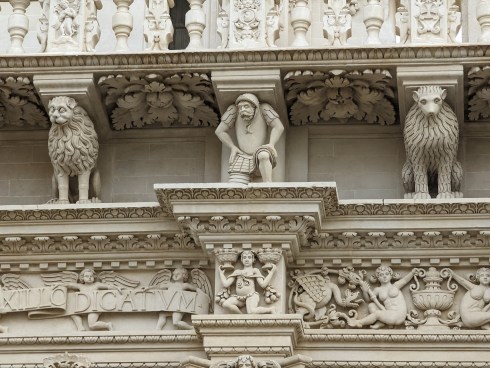
Animals, figures, grotesques, saints, vegetables and putti (cherubs) oppulently decorate the exterior walls. Above the ballustrade the putti play with symbols of spiritual and temporal powers.

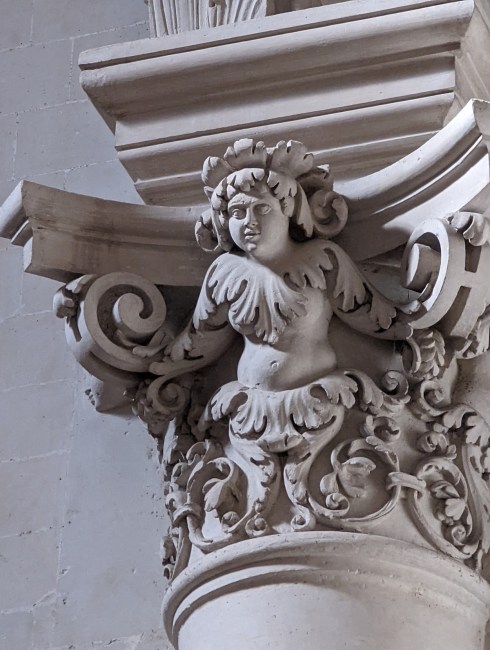
The interior of the Basilica continues the Baroque tradition with seventeen altars lining the side naves. Each altar is framed by multiple limestone pillars, no two the same. Elaborate corinths complete each pillar, a different motif for every pillar at every altar.
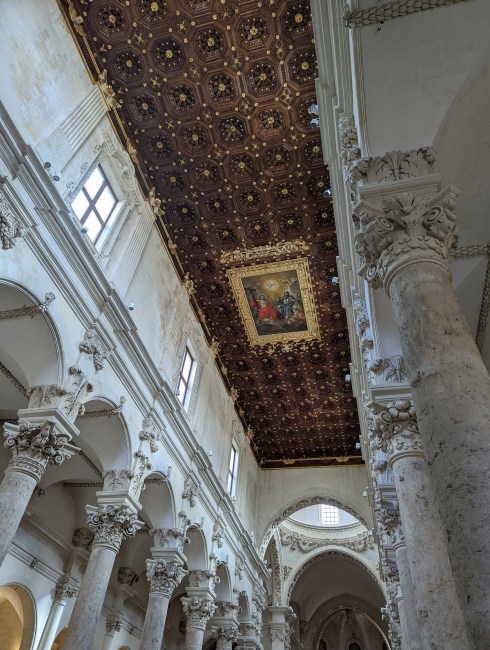
The highly ornamented wooden caisson ceiling looks down on the main vault of the Basilica.
The final glory of the Basilica lies in the Rose Window designed in Romanesque style and sited above the entrance of the church allowing light to gloriously flood the interior of the church.

 MedFlies