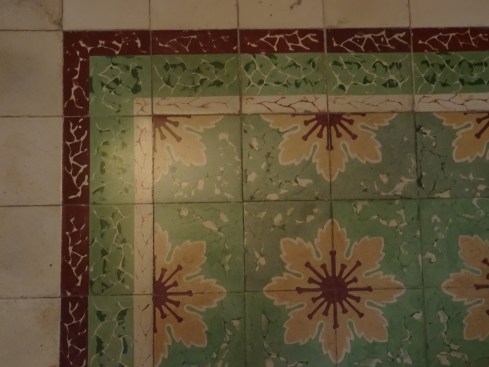
The first night we arrive, Janet gives us a tour of the Colonial house where we will be living for the next three months. Janet points out the original “pasta” stone floors. Geometrically patterned stone is laid to appear as an elaborately colored rug in each room.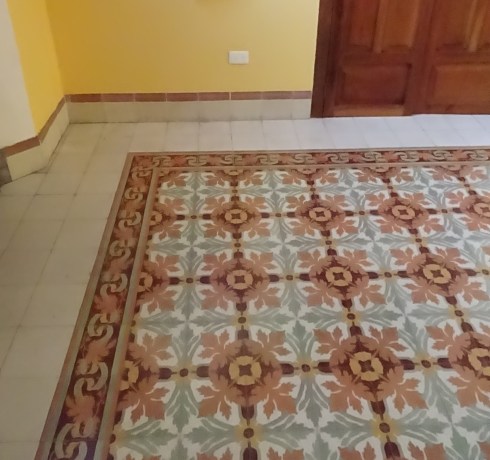
The effect is utilitarian and decorative. It reminds me of the mosaics we saw in the abandoned palazzi in Sicily…color and dimension encapsulated in a hard, polished stone surface.

When we come to the baño, Janet points out the stone sink. “This is carved by hand. The stone is accented with a dye made from a tea made from boiling tree bark. The dye has origins in Mayan culture,” she proudly explains.
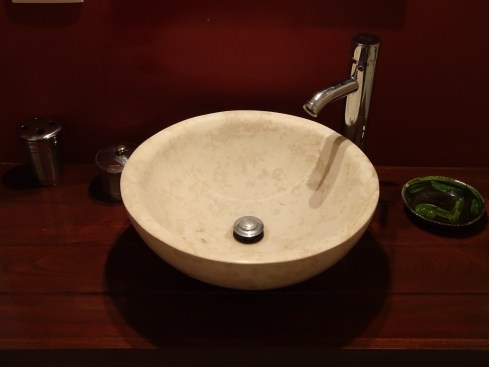
The rock is obviously soft if it can be hand-carved, but what is it? I research the types of rock used in Merida’s present day renovations of the Yucatan’s Colonial homes. This is what I find.
“There are three basic kinds of stone, all of which are types of limestone, found locally and used extensively in building and decoration here and throughout Mexico. The softest stone is a white limestone called conchuela or coquina. It is marble-like in its appearance, often has tiny but visible sea shells in it and is quite porous. Because of that, it isn’t a good stone to use for counters or floors, but it makes great sculptures, wall sconces, wall molding, decorative columns, table-bases and frames. The other white stone is called macedonia and is quite a bit denser and harder. It polishes up nicely and is used in all the ways conchuela is used, but it can also be used in places like bathrooms and kitchens. The third stone is called Ticul stone, after the town near which it is found. The stone is orange or reddish in color, and can also be used in wet environments. It is dense and also polishes up nicely. These stones are also sometimes referred to collectively as cantera.”*
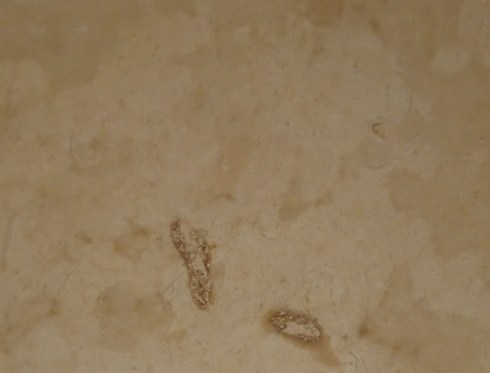
So these stone sinks and also the stone for the showers and all of the counters in the kitchen are probably “macedonia.” It shows the coquina’s bits of light and dark shell in the limestone.
If anyone knows more about stone tile floors decorated with pasta designs or stone used in decorative and functional structures in the Yucatan please expand or correct my information and tell us more about these beautiful substances.
*Yucatan Living:”The Stones of Dzitya”May 9, 207: Destinations, p.21. www.yucatanliving.com
 MedFlies