Domvs Romana is the aristocratic townhouse of a wealthy Roman of Melite (the ancient name for Malta) that has survived, in part, since the 1st century AD in Rabat, Malta. We visited on a windy day after the tumultuous storm that felled “The Azure Window” a natural stone bridge on the coast of Gozo, Malta’s second largest island. This was the wonder of which the Malteze were most proud. In light of the loss of this natural monument, the unlikely survival of Domvs Rominua was even more extraordinary for us.
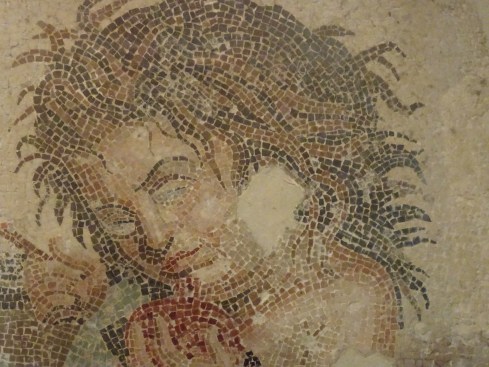
Malteze artists were masters of mosaic art as you can see from the stylized portrait above. The shading of the face, the movement of the hair, the gestures of the hands are created by laying hundreds of thousand of tiny mosaic pieces in a soft plaster substrate. This figure is especially notable for the use of worm shape tiles that allow the flowing waves and curl of the hair.
These smaller fragments were part of larger floor mosaics found in tact when the site was excavated in the late 19th century. The tactile nature of the tiles and their geometric rigidity make these portraits even more spectacular viewed live.
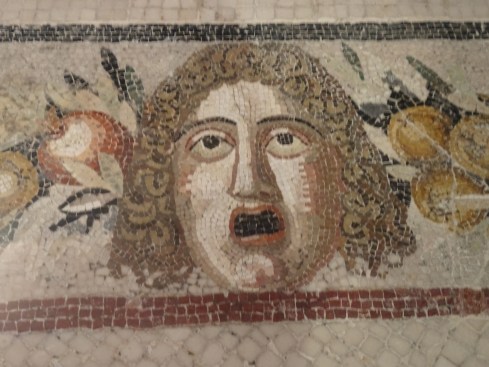
The art was informed by the use of figures and forms with symbolic meaning to the Romans.
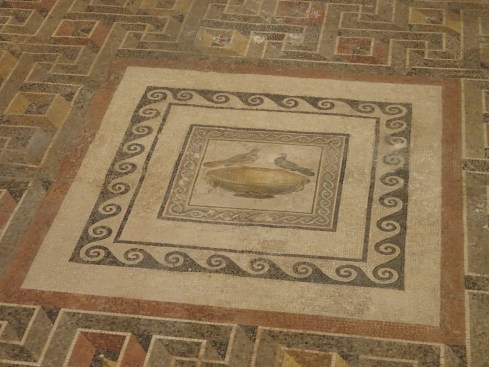
This floor design is called, “The Drinking Doves.” This is one of the most famous and widely diffused motifs of antiquity. The design was favored by rich and noble Romans. Today you can see The Drinking Doves in Malta, Pompeii, Alexandria and other prominent Roman sites.

The floors borders and backgrounds feature dramatic geometrics that take on three-dimensional effects.
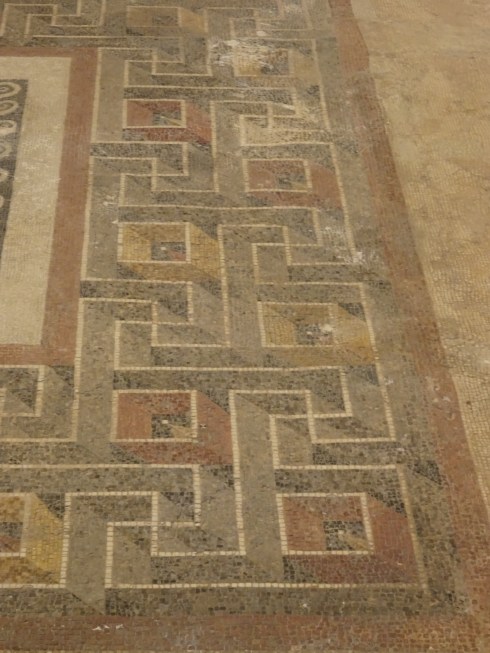
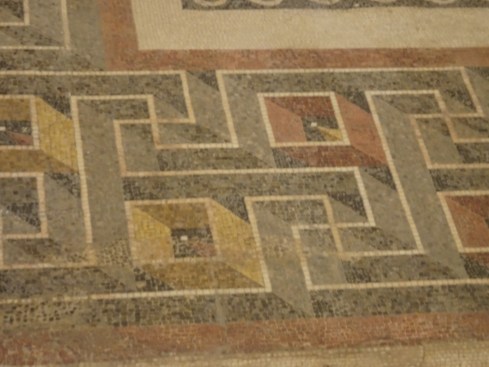
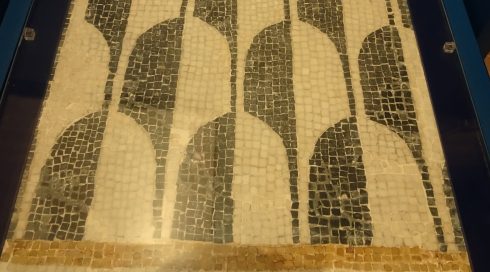
My particular favorite is a floor fragment with a simple black and white fish-scale design.
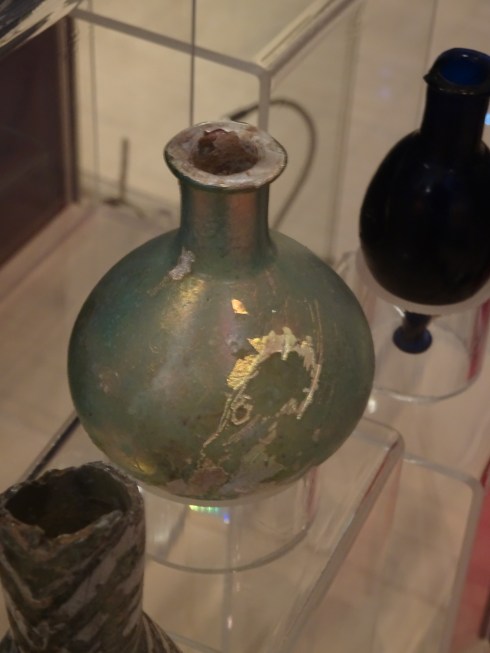
In addition to the famous mosaics we were able to see glass amphorikos (perfume bottles.) The luminescence of the glass was surprising and unexpected. Who could suppose that the quality of these excellent examples would survive.


Extant pieces of architectural features from the interior of the house were also discovered and curated. (A historical note, the very existence of any of this town house is amazing as a great deal of it was destroyed in the early 20th century in the building of a railroad through Rabat. It is hard to imagine this work of art being pick-axed but so it was.)


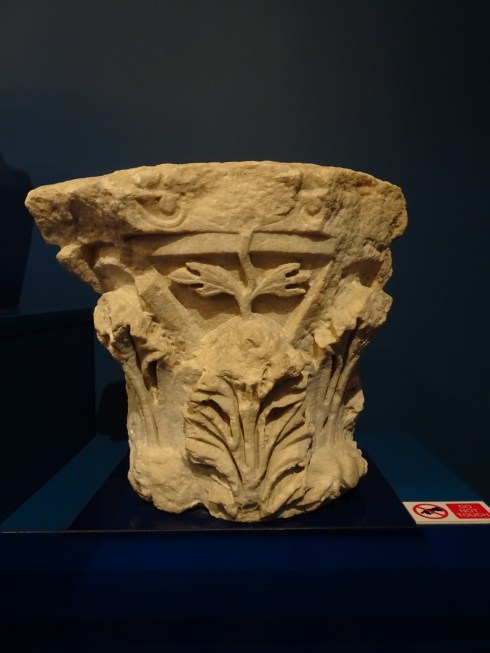
The first column with a fluted shaft above is an example of a Doric style column, quite common in houses of the Roman aristocracy. But the second column is more unusual as the design has an Asian character to it with the leaves and vines. It is a tribute to the far reach of the Roman empire at the time the house was built.

This is a marker from a Muslim cemetery found near the Domvs Romana at the time of excavation. The graves, found with the bodies facing Mecca, is proof of the importance of these peoples in the daily life of a Roman town.
 MedFlies