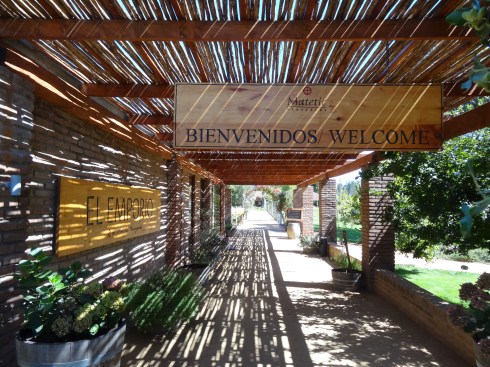
 We visited the Matetic Vineyards in the Casablanca Valley, a protected vale between Valparaiso and Santiago. Chileans love their wine. Unlike books, which are astronomically expensive in Chile, wine is cheap and good.
 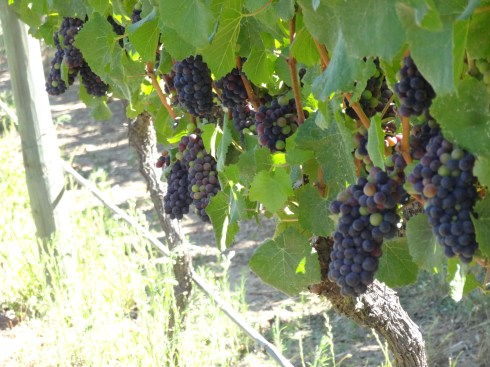 This valley and the neighboring region, San Antonio, are known for their white wines. Cooled by the nearby ocean with its cold Humboldt Current, the sheltered valley has the perfect growing conditions for whites. Soils are filled with minerals imparting a distinctive flavor to the grapes.
 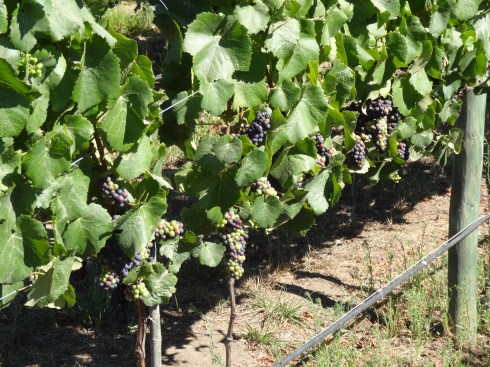 Matetic is a new winery founded by a Croatian family. This winery is all organic, fertilized by llamas, alpacas, chickens and horses and protected from disease by ladybugs. The birds are scared off by a regularly triggered shot sound effect. And the cold nights are moderated by wind turbines. What is even more unusual about this winery is that planting and harvest are chosen by the phases of the moon.
 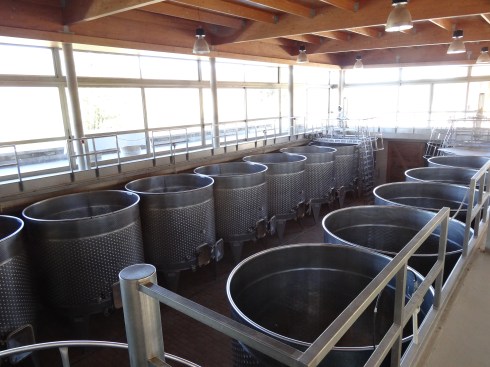 The fermentation process for red wines uses the natural yeast found in each grape variety. The resultant wine has a clarity that reflects that natural fermentation. We tasted a Syrah, their signature “Corralillo” red. The taste was particularly bright with hints of grapefruit and peach unusual for a red wine.
The white wine goes through a different process with a finishing in French oak barrels. The aging cellar is underground, with walls of river rock gavillons cooled by a misting process from a pond on the roof of the cellar. Though Chile is known for its red wines, the cooler climate of the Casablanca and San Antonio 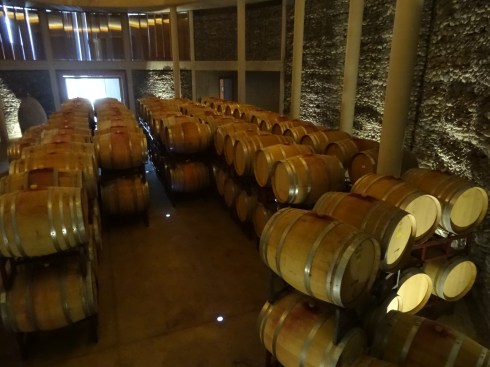 Valleys make them known for their whites, Sauvignon Blanc, Chardonnay and Gewürztraminer primarily.
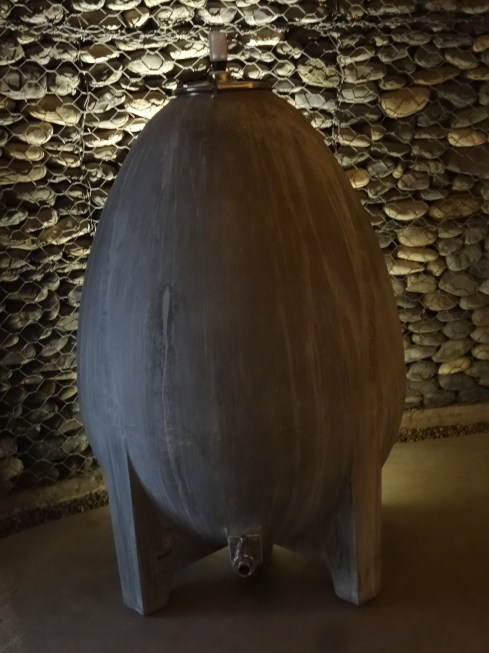 The winery is now experimenting with a concrete egg to replace oak barrels in the aging process. The concept comes from France. Supposedly the flavorless concrete allows the natural flavor of the wine to develop without the oaky flavor inherent in the barrel process. The architecture of their entire winery reflects this same progressive attitude.
The buildings are a long low design of natural materials that sit lightly on the land. The walls of the winery tasting room are adobe or hand stacked stone with a portola of natural poles much like the ones we have in the indigenous architecture of New Mexico.
Our guide was a beautiful young Chilean woman with perfect English. She studied language at the Catholic University in Valparaiso and has lived all of her life in the region.
English speakers are not that common in Chile. We manage to make ourselves understood with my rudimentary Spanish and a lot of pantomime. The response from Chileans is welcoming and helpful. If you even try to speak Spanish, they are delighted.
The Chilean people are a mixture of the many immigrants that have come to the country. Irish, Italian, Croatian, German, and more are mixed with the native Mapuche people who were the first inhabitants of South-Central Chile. Today, due to the Spanish conquest of Chile, only about 4 percent of the people are considered to be Mapuche. 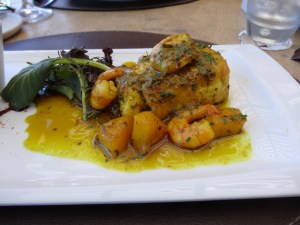
We finished our day with lunch at another winery, Casas de Bosque. Dana ordered the seafood curry and I had lamb risotto.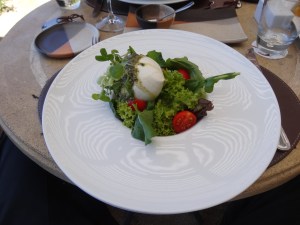
We started with a salad of rocket and goat cheese with pesto. Delicious.
As we looked around the restaurant we realized that many of the other visitors to Chile we meet are predominantly American and German. There is a smattering of Canadians and British, occasionally French but many Americans.
We finished the day driving back to Valparaiso at sunset, a satisfying day.
 MedFlies