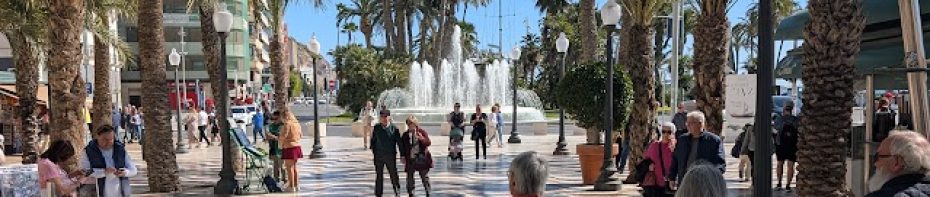

The Cathedral of Saint Nicholas of Bari was a 13th century church built to mark the Muslim’s handover of Alicante to Prince Alfonzo of Spain. Rebuilt again in the 17th and 18 centuries, its sober exterior is an example of the early Renaissance that belies the elegant Spanish Baroque decorative art inside.
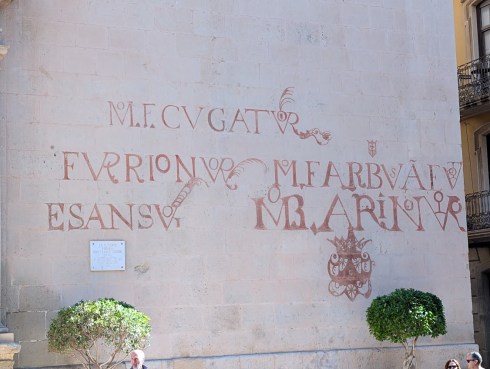
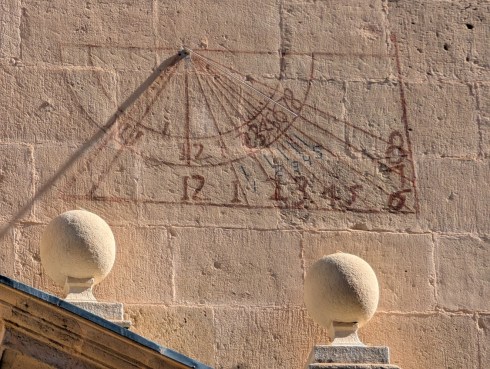
The stark facade is marked by elegant red encryptions. The story goes that after university finals, students and their families would celebrate the occasion with bullfights. The students showed their youthful prowess in the bullring. Blood from the fights was mixed into paint used to make their mark on the cathedral walls, an early form of grafitti. Some of the script ends in lines marked by “V”s for victory and jubilation. And a sundial is painted near the cathedral’s entry to mark the passing time.
The interior of the Cathedral shows a soaring Renaissance architecture of pale domes and Roman arches.
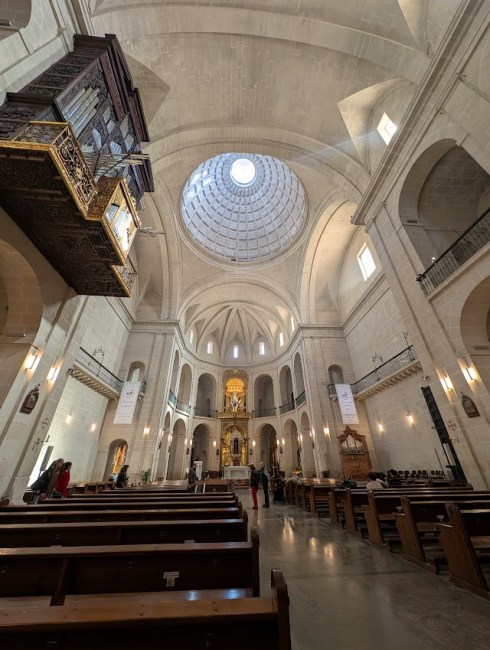


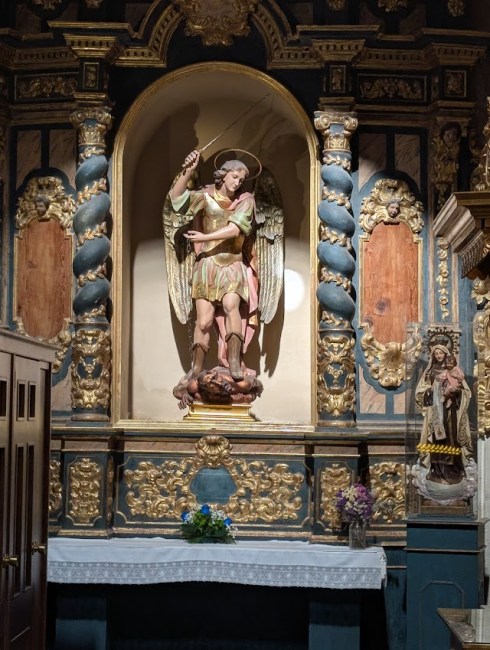
And the opulent ornamentation on the front and side altars is bright and celebratory with gold leaf, intricate floral patterns and richly ornamented columns. Brilliant paint colors stand out against the pale stone walls.


From a local neighborhood, the 45 meter blue dome of the cathedral is a compelling icon in the Alicante cityscape.
 MedFlies
Hi Susan, So good to have you here. And so pleased your second try at Commenting worked! It is peaceful here. This city is very civilized. I have heard one car horn here since we arrive…one. There are walk lights at major intersections. But there are many narrow one-way streets with no stop signs. Cars just stop and wait, and wait for pedestrians to cross. If there is a straggler, they wait for them to catch up. Amazing.
thanks for another look at history.
History is all around us here.
The proximate contrast if the “underdone” vs “overdone” is eye-arresting and adds to the beauty of each. 😊🇩🇪
Derek Simmons retiredinsanclemente@gmail.com
It was wonderful to see the Renaissance and Spanish Baroque juxtiposed. The long process of building and decorating the Cathedral (17th and 18th Centuries) makes that possible. What I didn’t include was that the name of the Cathedral changed to the Co-Cathedral, as it now shares a Bishop with another community.
Gorgeous photos, Jill and Dana; thank you! Your opening sentence made me think you might want to read Maria Menocal’s book, “The Ornament of the World: How Muslims, Jews, and Christians Created a Culture of Tolerance in Medieval Spain.” It’s a good read, and good background for what you are seeing in Alicante.
So good to see you here Marty. Thanks for the reference. In Lecce and here the Muslim roots are obvious throughout the city.